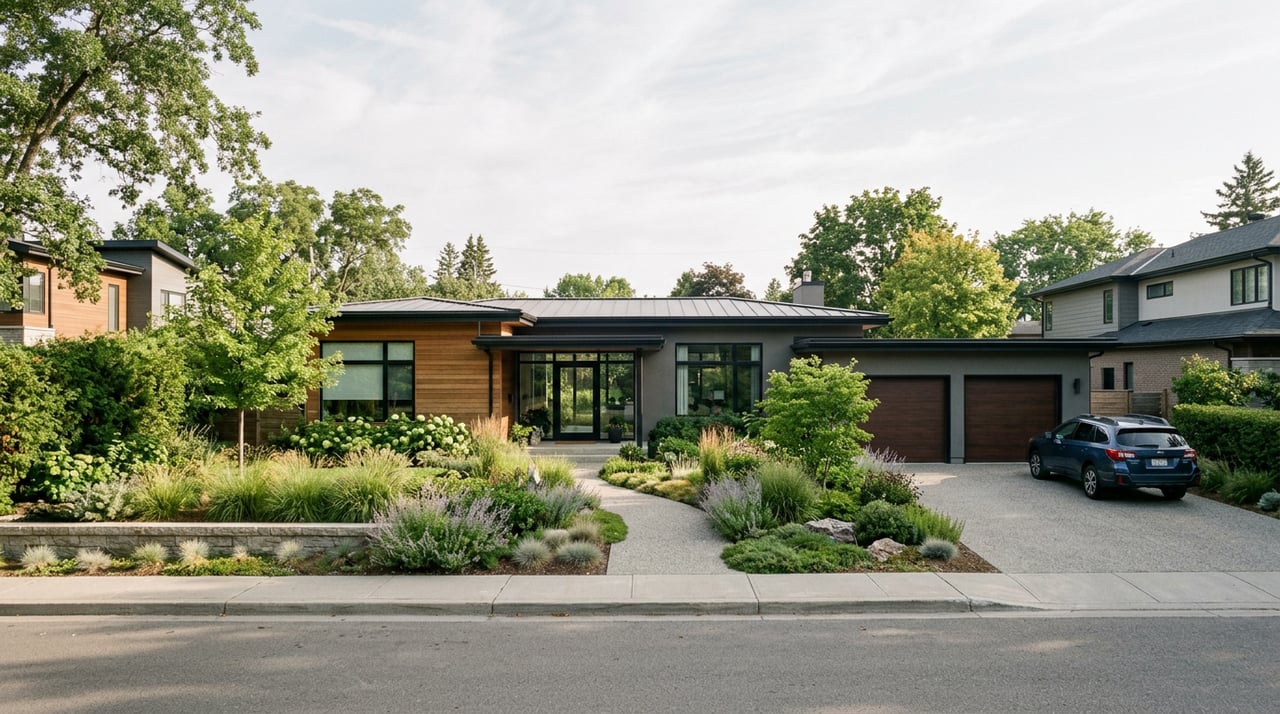
In La Costa, the List Price Doesn't Tell You What You'll Actually Pay
September 24, 2026
September 24, 2026
Two homes come on the market in the same week, both in La Costa, both listed within $10,000 of each other, both around 2,800 square feet. A buyer touring them assumes the monthly payment will land in roughly the same place too. Then the loan officer runs the numbers and one house comes back $350 a month more expensive than the other, before either buyer has changed a single term on the mortgage itself.
Nothing about the sale price explains that gap. The explanation is sitting on the county tax bill, in a line most buyers don't think to ask about until escrow is already open: Mello-Roos.
La Costa isn't one neighborhood. It's a collection of distinct communities built across five decades, and the decade matters more than the price point when it comes to what you'll actually owe every month.
Old La Costa, also called Rancho La Costa, went up in the 1960s through the 1980s: custom estates on wide lots, architecturally eclectic, built before California cities routinely used Community Facilities Districts to fund new infrastructure. Homes there carry no HOA and no Mello-Roos. Nearby pockets built in a similar window, including La Costa Knolls and Meadowood, follow the same pattern. Effective property tax rates in these tracts run around 1.09% to 1.2% of purchase price, which is close to a straightforward base rate with nothing stacked on top.
That absence isn't a marketing footnote. It's the product of timing. Mello-Roos financing exists because Proposition 13 capped how much property tax revenue California cities could raise from existing homes, which left almost no way to pay for the roads, sewer lines, and parks a new subdivision needs before it's built. The Community Facilities District structure filled that gap starting in 1982. Anything built before that wave of financing, or built without a developer choosing to use it, simply never picked up the tax.
Walk a few minutes in almost any direction from Old La Costa and you're in a different cost structure entirely. La Costa Valley, La Costa Greens, La Costa Oaks, and La Costa Ridge were built between roughly 1998 and 2014 as master-planned communities, each organized around its own amenity club: The Valley Club in La Costa Valley, The Presidio Club in La Costa Greens, The Oaks Club anchoring La Costa Oaks. These communities carry monthly HOA dues, generally in the $125 to $300-plus range depending on the village, and layer Mello-Roos assessments on top, typically adding another $200 to $400 a month in some of these areas.
Aviara, on the north side of Carlsbad in the 92011 zip code, follows the same pattern at a higher tier. Every property there falls under the Aviara Master Association, with HOA fees running $200 to $500 or more a month, and Mello-Roos assessments apply across much of the community. Unlike Old La Costa, there's no HOA-free pocket to opt into inside Aviara. If you want the neighborhood, you take the fee structure that comes with it.
Here's the comparison in one place:
| Community | HOA | Mello-Roos | Approximate effective cost |
|---|---|---|---|
| Old La Costa / La Costa Knolls / Meadowood | None | None | ~1.09%-1.2% of purchase price |
| La Costa Valley | ~$125/month | Yes, older bonds nearing expiration in parts of the community | Base rate plus HOA plus a shrinking Mello-Roos |
| La Costa Greens | ~$250+/month | Yes | Base rate plus HOA plus Mello-Roos |
| La Costa Ridge | ~$300+/month | Yes | Base rate plus HOA plus Mello-Roos |
| Aviara (92011) | $200-$500+/month | Yes, widespread | Base rate plus HOA plus Mello-Roos, no fee-free option |
None of this shows up when you filter listings by price and square footage. Two homes at $1.8 million can sit on opposite ends of that table.
Mello-Roos doesn't behave like a normal property tax. It isn't tied to your home's assessed value, so it doesn't shrink as a share of your payment the way a mortgage balance does over time, and it isn't capped by the same 2% annual increase rule that governs the base 1% Prop 13 rate. It's a flat or formula-based assessment set when the district's bonds were issued, and it rides on your tax bill until those bonds are retired.
That last part is worth sitting with. Carlsbad's own Community Facilities District No. 3 illustrates it well: the city's published debt service schedule for Improvement Area 1 runs from 2006 through 2036, and Improvement Area 2 runs from 2008 through 2038. A buyer purchasing a home in that district today could be paying the assessment for another decade or more, not indefinitely, but not trivially either. Meanwhile, La Costa Valley's Mello-Roos bonds are reportedly nearing expiration in portions of that community, meaning the same $125-a-month HOA neighborhood that looked more expensive than Old La Costa five years ago may look closer to it in cost within the next few years, once that particular obligation retires.
This is the piece that a simple price comparison across listings can't capture. Two homes with identical HOA and Mello-Roos line items today can be on very different trajectories depending on how many years are left on the bond.
Before you get attached to a specific address in La Costa or Aviara, there's a short list of things worth confirming rather than assuming:
The San Diego County Assessor's office also maintains a general guide to locating your specific CFD by parcel number, which is the most reliable way to confirm what a title report or seller disclosure is actually telling you.
None of this makes Mello-Roos a reason to avoid a neighborhood. The infrastructure it funds, from roads to parks to the amenity clubs anchoring La Costa Valley and La Costa Greens, is part of what makes those communities function the way they do. The point is simpler: the number on the sale sign is not the number that determines your monthly housing cost, and in La Costa specifically, the gap between those two numbers depends on which decade you're standing in.
Does every newer home in Carlsbad have Mello-Roos? Not every one, but it's common in communities built after the early 1980s using Community Facilities District financing. Older tracts and a handful of specific communities like Old La Costa, La Costa Knolls, and Meadowood were built without it. Always verify the specific parcel rather than assuming based on the general area.
Is Mello-Roos tax deductible? Generally the portion used to repay bonds for new construction is not deductible the way standard property tax is, since it isn't based on assessed value. A portion tied to ongoing maintenance or services may be treated differently. This is a question for your tax professional, not something to assume either way from a listing.
Can I negotiate out of it? No. Mello-Roos runs with the parcel, not the buyer, so you inherit whatever term remains regardless of who you are or how you structure the offer. What you can do is factor the remaining obligation into your offer price and compare it honestly against homes without the assessment.
If you're weighing a home in Old La Costa against one in La Costa Greens or Aviara, the smartest move is running the real monthly numbers before you fall for either one. Katie Nelson + Associates works these La Costa and Aviara tracts regularly and can pull the specific CFD details on any address you're considering. Book an appointment and let's look at the full picture together, not just the list price.
Stay up to date on the latest real estate trends.

Katie’s award-winning experience and long-standing ties within the community provide her clients with a distinct advantage when it comes to finding their dream home or investment opportunity.

KATIE NELSON | CA DRE# 02134845
ADDRESS 682 S Coast Hwy 101 Suite 110 B Encinitas, CA 92024